🙇 Etiquette & Customs
How Koreans live day to day: manners, habits and unwritten rules
Transportation Etiquette
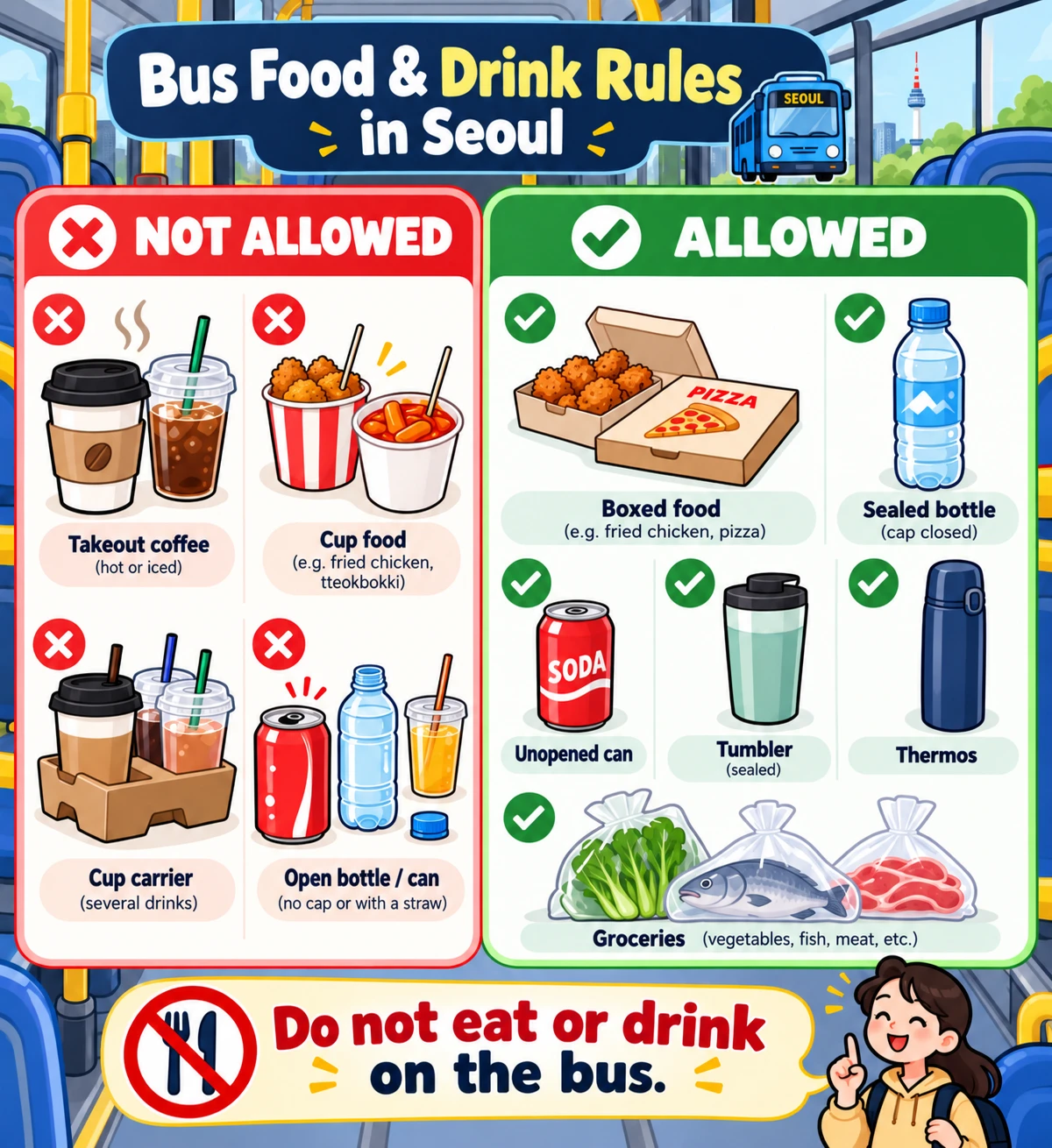
No Takeaway Coffee Cups on City Buses
Seoul city bus drivers can refuse passengers who carry drinks that could spill, and open takeaway cups are the usual example. A tightly sealed tumbler or a closed water bottle is normally fine, but it is the driver's call. Other cities set their own rules, so check before you board.
 AI generated
Illustration made with AI to show the idea. Rules can differ and the bus driver has the final say, so follow the instructions on the bus. Let Passengers Exit First
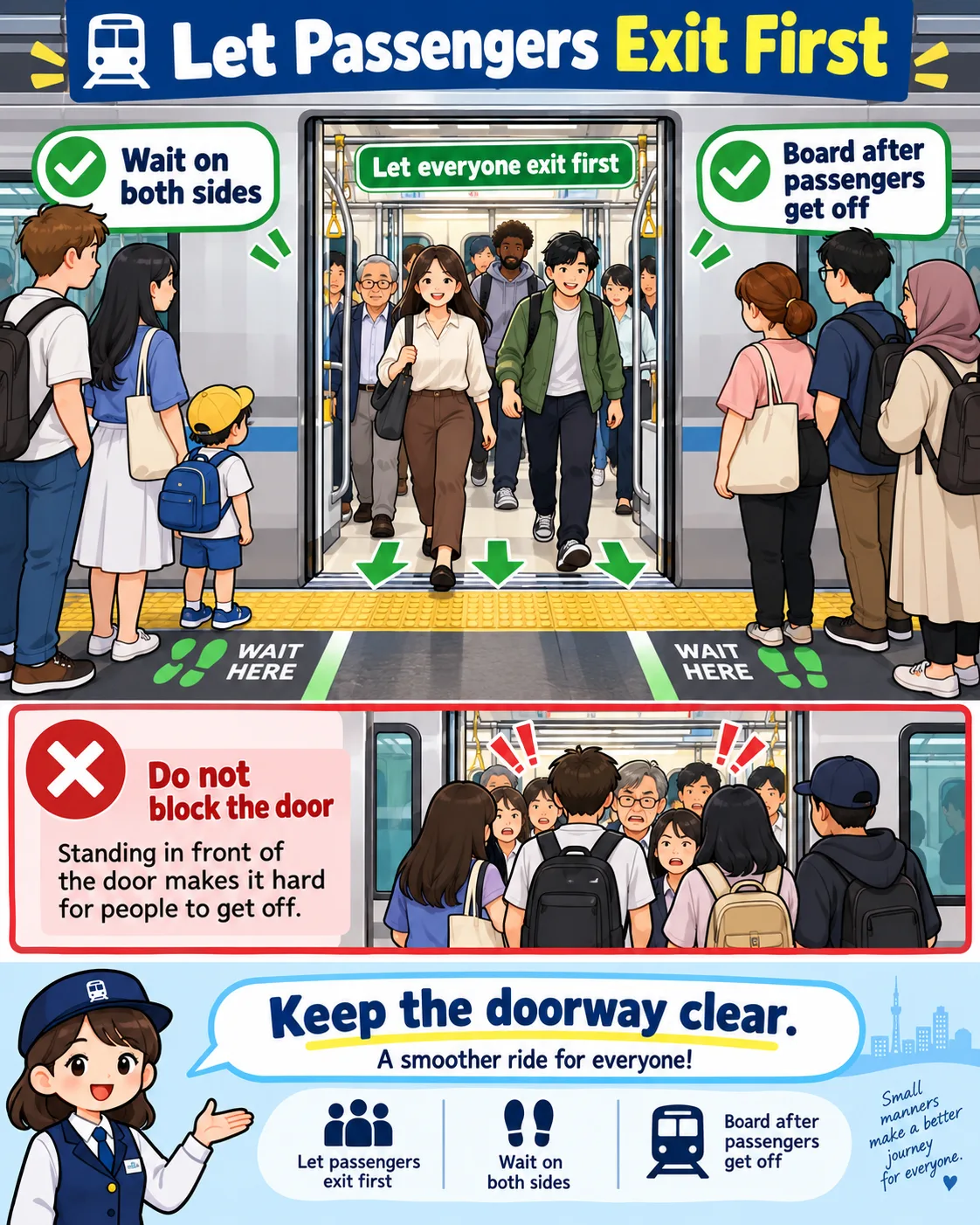
When the subway doors open, wait at the sides and let everyone get off before you board. Do not stand in front of the doors.
 AI generated
Illustration made with AI to show the idea. Priority Seats Are for Those Who Need Them
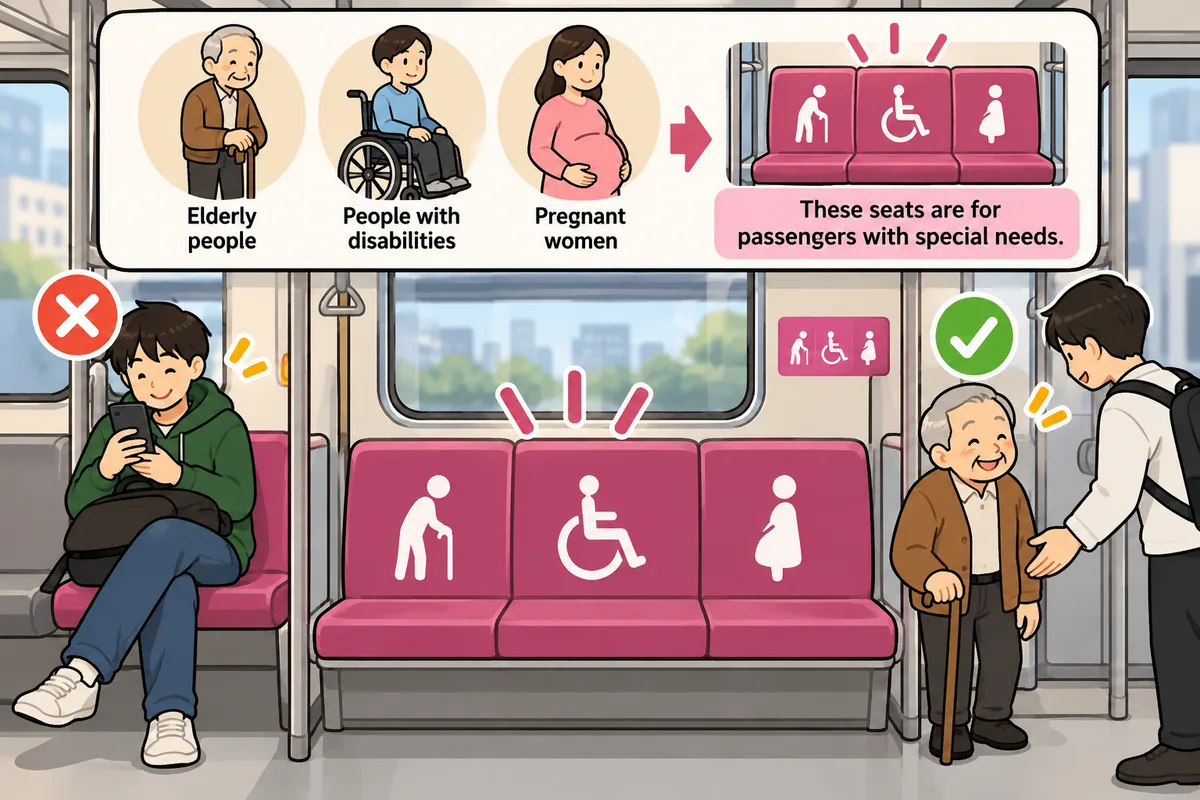
Priority seats are for older people, people with disabilities, pregnant passengers and others who need them. Many riders do not sit there unless they need to. Remember that some people who need a seat do not look like it.
 AI generated
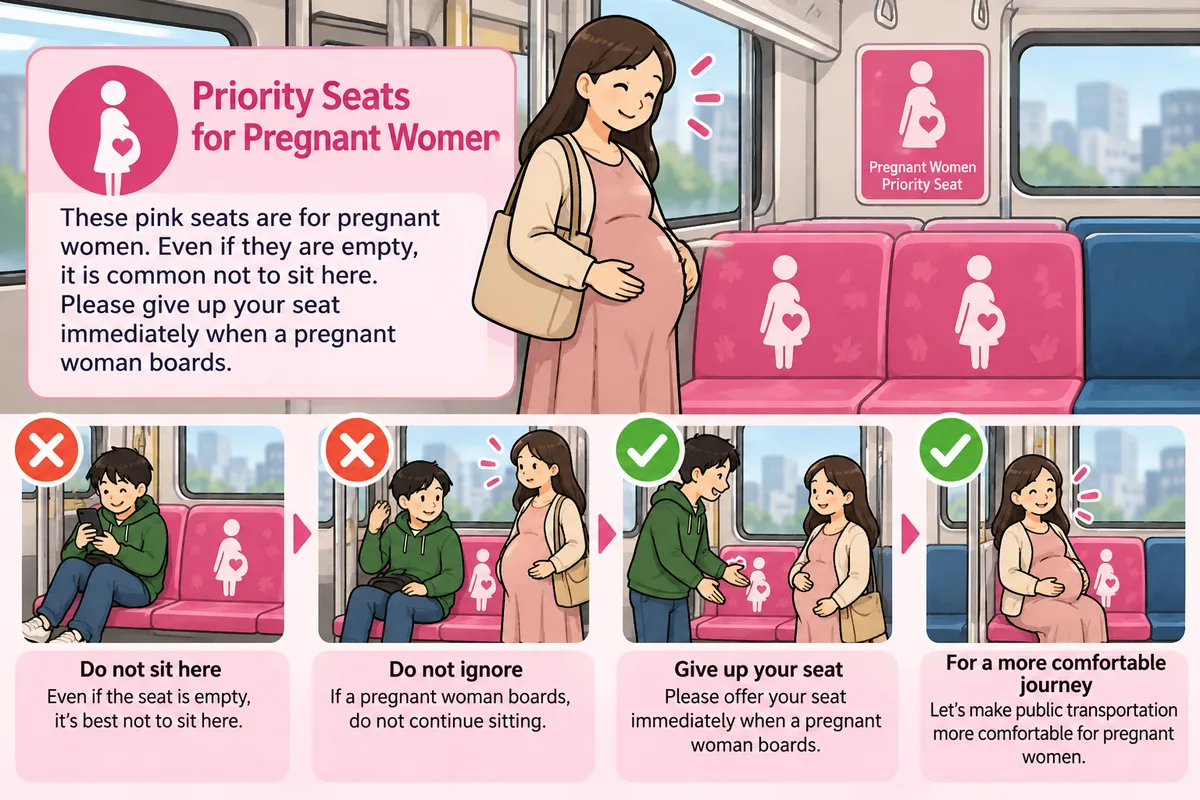
Illustration made with AI to show the idea. Pink Seats Are Reserved for Pregnant Passengers
The pink seats are set aside for pregnant passengers. Many people leave them empty even when they are free, and you should give up the seat at once if a pregnant passenger arrives.
 AI generated
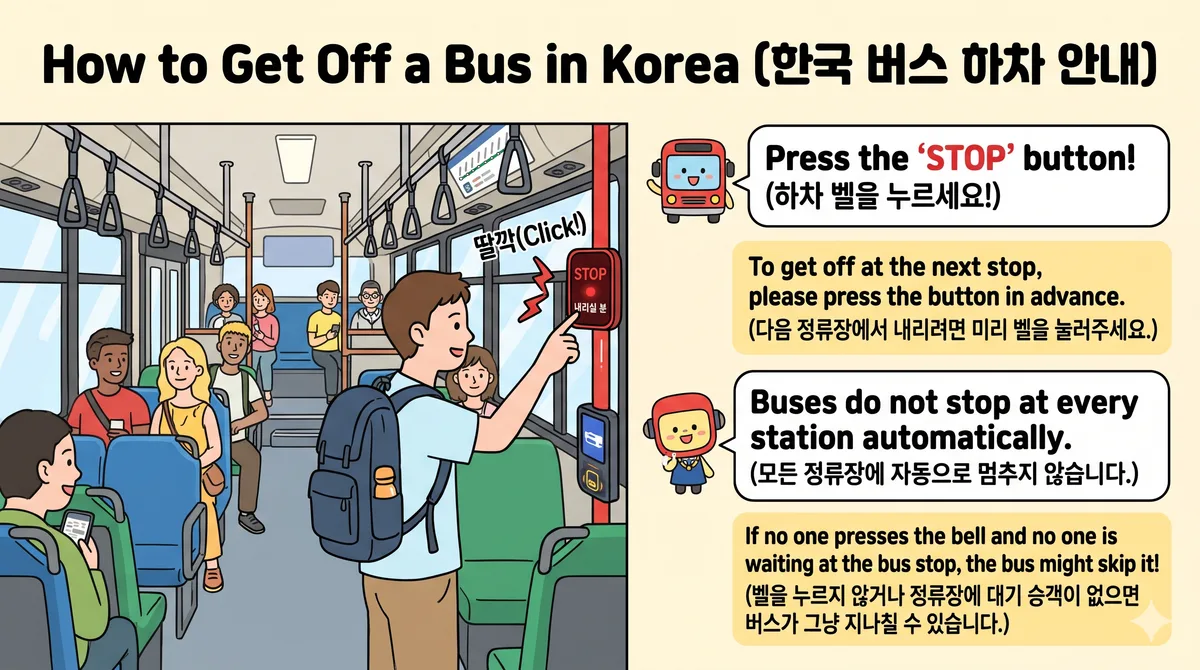
Illustration made with AI to show the idea. Press the Stop Button Before Your Stop
On Korean city buses you usually press the stop button before your stop. The bus does not always stop at every bus stop, as it does in some countries.
 AI generated
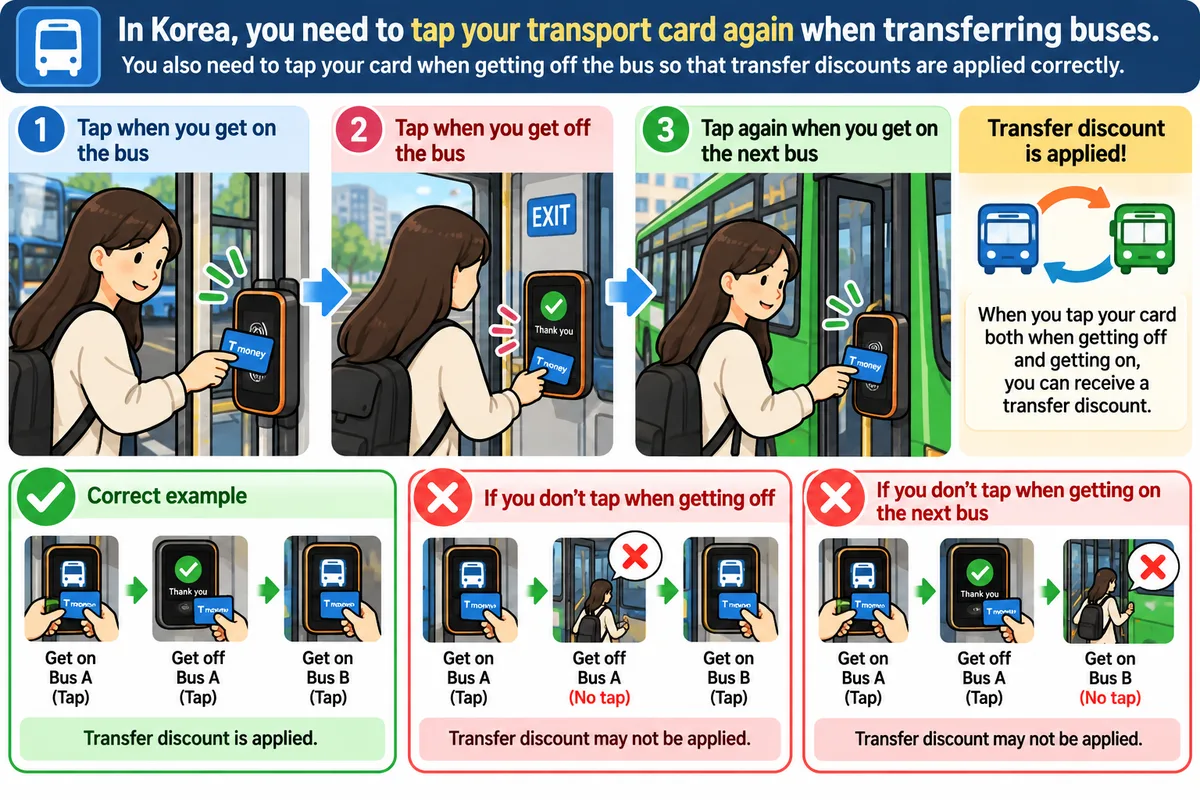
Illustration made with AI to show the idea. Tap Your Transit Card When Getting Off
Tap your card again when you get off the bus so that a transfer discount can be applied correctly. Transit card rules differ by region.
 AI generated
Illustration made with AI to show the idea. Transit card rules differ by region. Keep Phone Conversations Quiet
Talking on speakerphone or playing videos out loud on the subway or a bus bothers the people around you. Use earphones and keep calls short and quiet.
Follow Escalator Safety Signs
You may see people leave one side free, but that is not a rule everywhere. Holding the handrail and standing still is safer than walking or running.
Check Whether the Restroom Is Inside the Ticket Gates
In subway stations some restrooms are inside the ticket gates and some are outside. Check which side you are on before you go, because leaving the gates and coming back in can be a hassle.
Wear Your Seat Belt in Taxis
In Korea everyone in a car is required to wear a seat belt, including passengers in the back seat of a taxi. Buckle up as soon as you get in.
Restaurants & Cafés
Water and Side Dishes May Be Self-Service
If a sign says water or side dishes are self-service, get them yourself. Many restaurants refill side dishes for free, but not all of them.
People Often Find a Seat Before Ordering
In Korean cafés it is common to find a seat before you order. Some people mark a seat with their belongings, but they can be lost or stolen, so do not leave valuables behind.
Say "Jeogiyo" to Call a Server
Saying "jeogiyo" (excuse me) or pressing the call button is the normal way to call staff. Avoid shouting across the room or pointing at staff.
Tipping Is Generally Not Expected
You do not need to tip at ordinary restaurants and cafés or in taxis. Just pay the amount on the bill.
You May Need to Pay at the Counter
Some places let you pay at the table, but paying at the counter near the door is common. Pay-first restaurants and kiosk ordering are also widespread.
You May Have to Grill Your Own Meat
At a barbecue restaurant you may grill the meat yourself, or the staff may do it for you. If staff are grilling, ask before you touch the tongs or scissors.
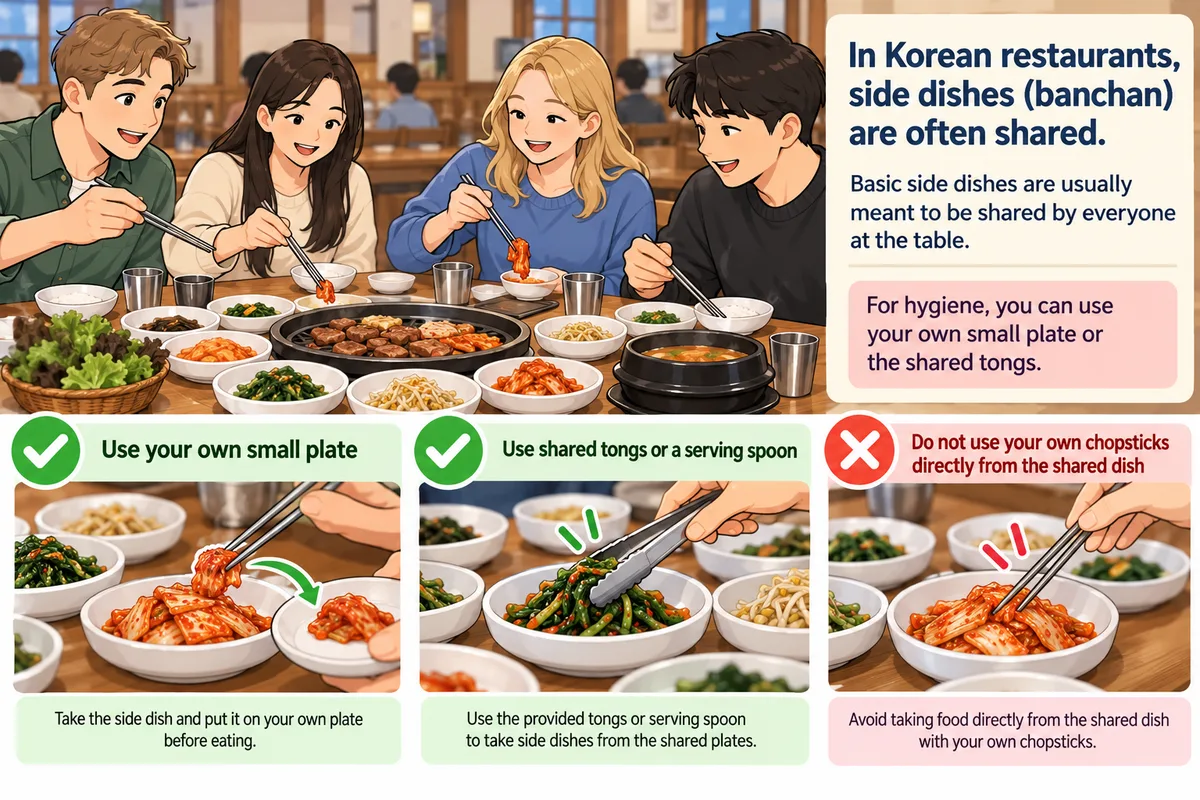
Side Dishes Are Often Shared
The basic side dishes are usually shared from the middle of the table. If you prefer, ask for a personal plate or use the shared tongs.
 AI generated
Illustration made with AI to show the idea. Outside Food May Not Be Allowed
Bringing food bought somewhere else into a café or restaurant may be against the shop's policy.
Some Restaurants Require a Minimum of Two Servings
Barbecue and hot pot restaurants in particular may take orders only for two or more servings. If you are alone, check the order conditions at the entrance.
Contactless Food Delivery Is Common
Delivery riders often leave the food at your door instead of handing it over. You may need to give the building's entrance code when you order.
Trash & Recycling
Use Official Garbage Bags
General household waste in Korea usually goes in volume-based bags designated by the local government. You can buy them at convenience stores and supermarkets.
Separate Recycling by Material
Paper, cans, glass bottles and plastic are sorted separately. Empty and rinse containers first. The details differ between local governments.
Food Waste Is Collected Separately
Food waste goes in a separate bin, a special bag or an RFID collection machine. Some items, such as bones and shells, are not counted as food waste.
Follow Designated Trash Collection Times
Where you live, trash may be put out only on set days and at set times. Apartments and houses work differently.
Public Trash Bins Can Be Hard to Find
It can be hard to find a bin for drink cups and packaging on the street. A small bag in your pocket or backpack is handy.
Don't Leave Your Trash at Another Business
Do not leave a cup bought elsewhere at another shop. A shop's bins may be for its own customers only.
Bulky Waste Requires Special Disposal
Chairs, desks and mattresses do not go in regular bags. Check your local government's procedure for bulky waste.
Apartment Recycling Areas Have Their Own Rules
Some apartment buildings allow recycling only on certain days or at certain times.
Housing & Apartment Life
Take Off Your Shoes Indoors
In Korean homes you take off your shoes at the entrance, where the entry area is set apart from the living space.
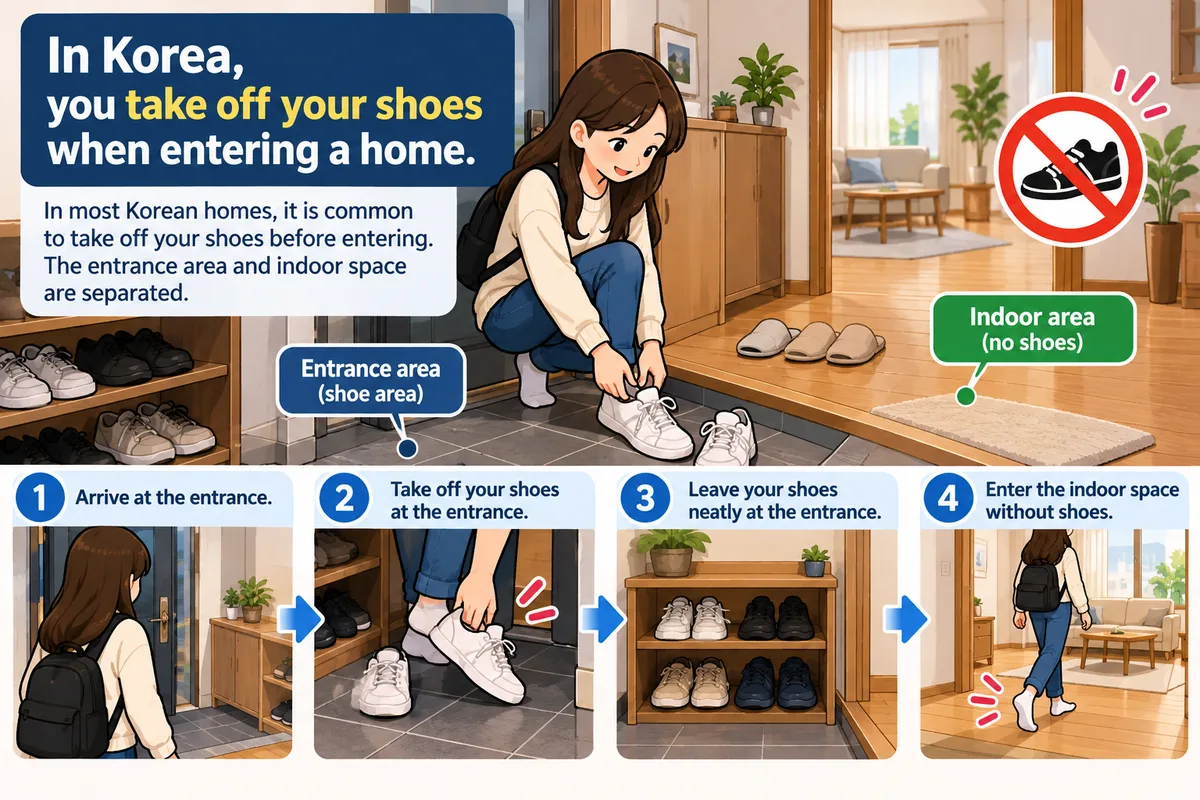 AI generated
Illustration made with AI to show the idea. Avoid Noisy Housework Late at Night
People in apartments are sensitive to noise between floors. Avoid running the washing machine or vacuum or moving furniture late at night.
Be Mindful of Floor Noise
In apartment buildings, running or dropping heavy objects can be heard by the people downstairs.
Many Buildings Use Digital Door Locks
Digital door locks and building entrance codes are common. As a visitor, use the intercom to call the resident rather than following someone in.
Packages Are Often Left Outside Your Door
In apartments, delivery drivers often leave a parcel at your door and send a message that it has been delivered.
Smoking May Be Restricted in Apartments
Hallways and stairwells in apartment buildings may be non-smoking areas. Even inside your own home, take care that smoke does not bother your neighbors.
Reserve the Elevator Before Moving
Some apartment buildings ask you to book the elevator for moving day or to tell the management office beforehand.
Maintenance Fees Are Often Separate from Rent
Maintenance fees can cover cleaning, shared facilities and security. Electricity, water and heating may be billed separately.
Shopping & Convenience Stores
You Can Eat Instant Noodles at Convenience Stores
If a store has a hot-water dispenser and a place to sit, you can cook and eat cup noodles there. Not every convenience store lets you eat in.
Shopping Bags May Cost Extra
Cashiers often ask whether you need a bag. Bring your own bag to save the fee.
Store Microwaves Are Generally for Customers
Microwaves and hot-water dispensers in convenience stores are usually meant for products bought in that store. If you want to heat food from elsewhere, ask the staff.
Self-Service Stores Are Common
Unmanned ice cream shops, stationery stores and similar places let you scan the barcodes yourself and pay by card.
Even Small Purchases Can Be Paid by Card
Paying by credit or debit card even for small items is normal. Street stalls and some traditional markets may still need cash.
Cashiers May Ask If You Need a Receipt
"영수증 드릴까요?" (yeongsujeung deurilkkayo?) means "Would you like a receipt?" If you do not need one, you can say "gwaenchanayo" (no, thank you).
Public Spaces & Street Etiquette
Smoking Is Restricted in Many Public Areas
Smoking can be banned at bus stops, in parks, near schools and in other designated areas. Fines depend on the area, so look for the signs.
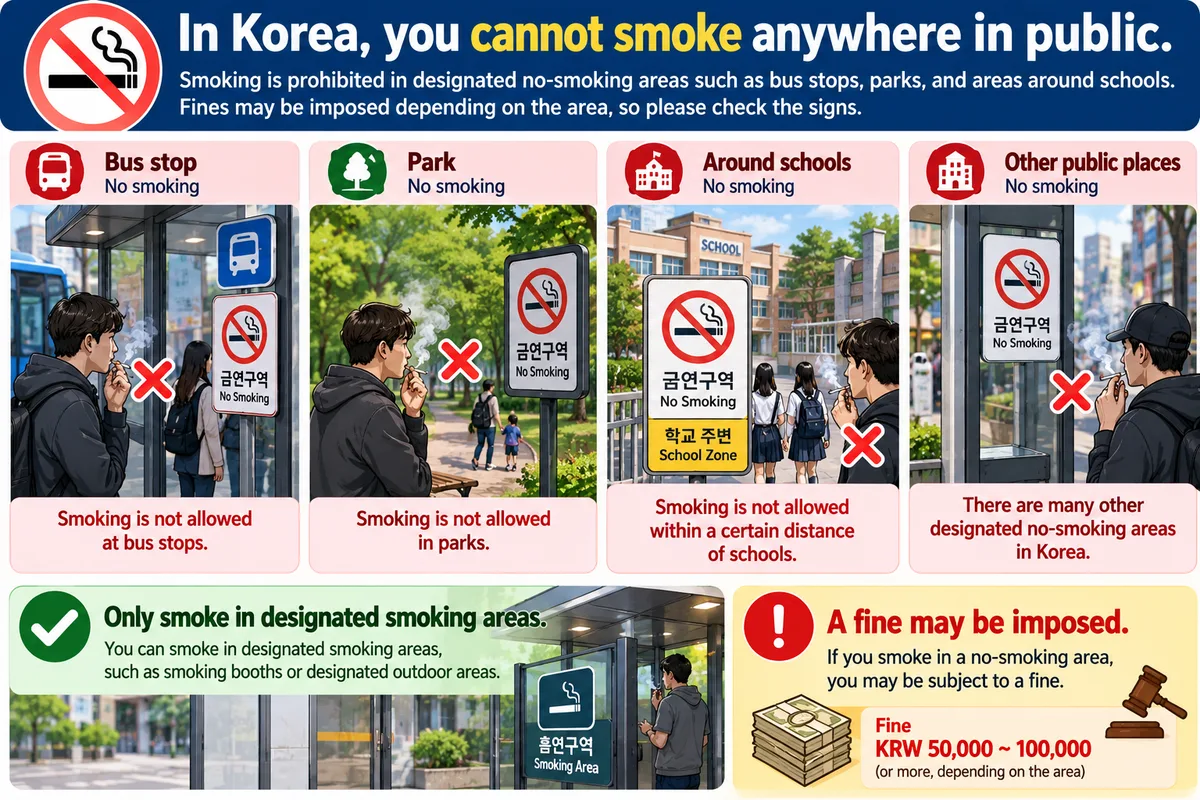 AI generated
Illustration made with AI to show the idea. The fine shown in the picture is only an example: fines are set by each city or district, so check the signs. Respect People's Privacy When Taking Photos
Take care not to invade other people's privacy when you take photos or video. If you plan to post them online, it is safest to ask for permission.
Take a Number and Wait for Your Turn
At banks, community centers, hospitals and similar places you often take a numbered ticket and wait to be called.
Queue in Order
At bus stops, popular restaurants and shops, first come, first served is the basic courtesy.
Many Public Restrooms Are Free
You can find free restrooms in subway stations and public buildings. Not every restroom is open around the clock.
Follow Restroom Waste Signs
Toilet paper normally goes in the toilet, but some older buildings have a sign asking you to use the bin because of the plumbing. Never flush wet wipes or sanitary products.
Everyday Surprises
Press the Table Button for Service
In Korean restaurants, press the call button on the table and a member of staff will come. It can seem remarkable if you have never seen it before.
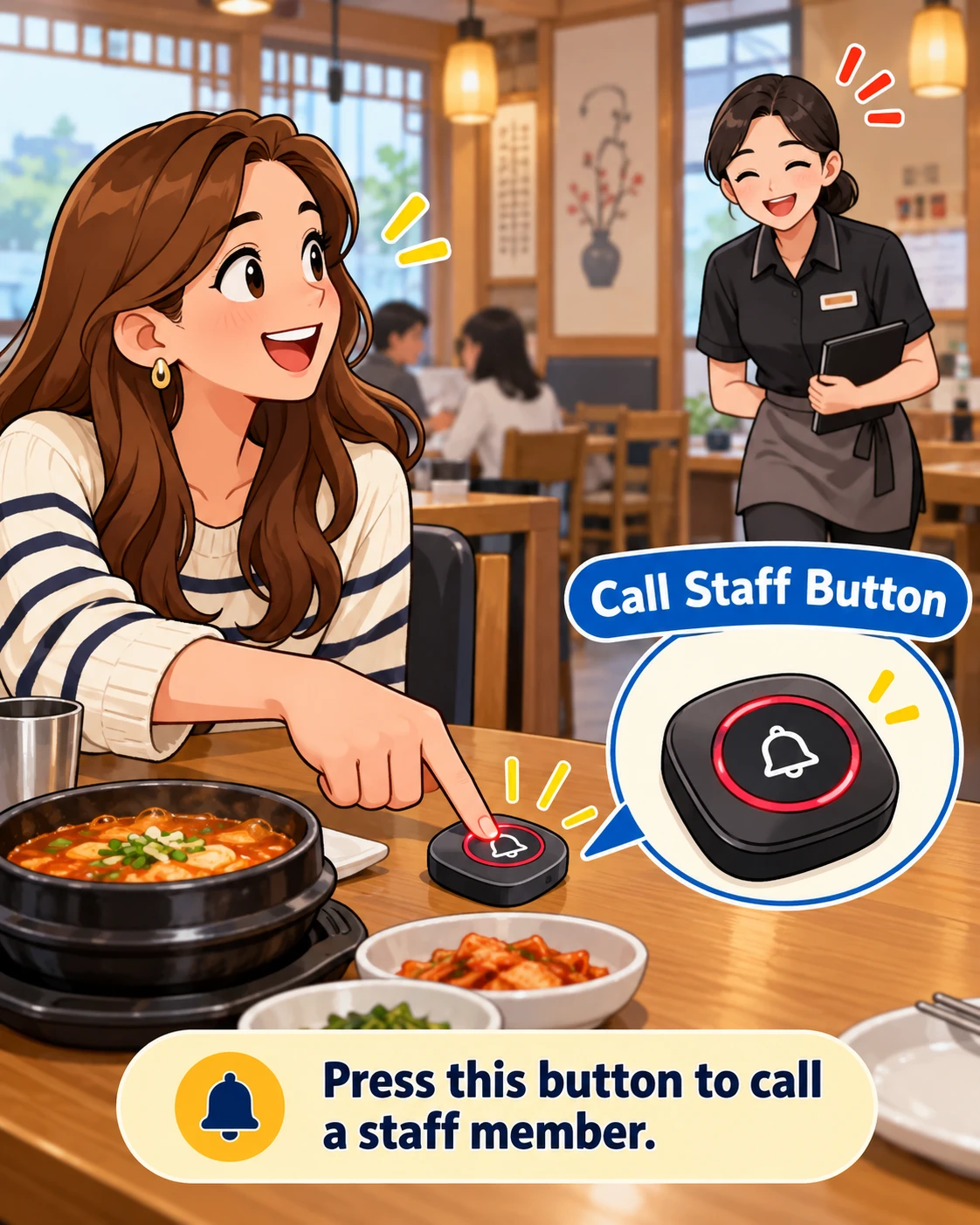 AI generated
Illustration made with AI to show the idea. The button looks different from place to place, and not every restaurant has one. Check Under the Table for Chopsticks and Spoons
Some restaurants keep spoons, chopsticks and napkins in a drawer on the side of the table. Check there if staff have not given you any.
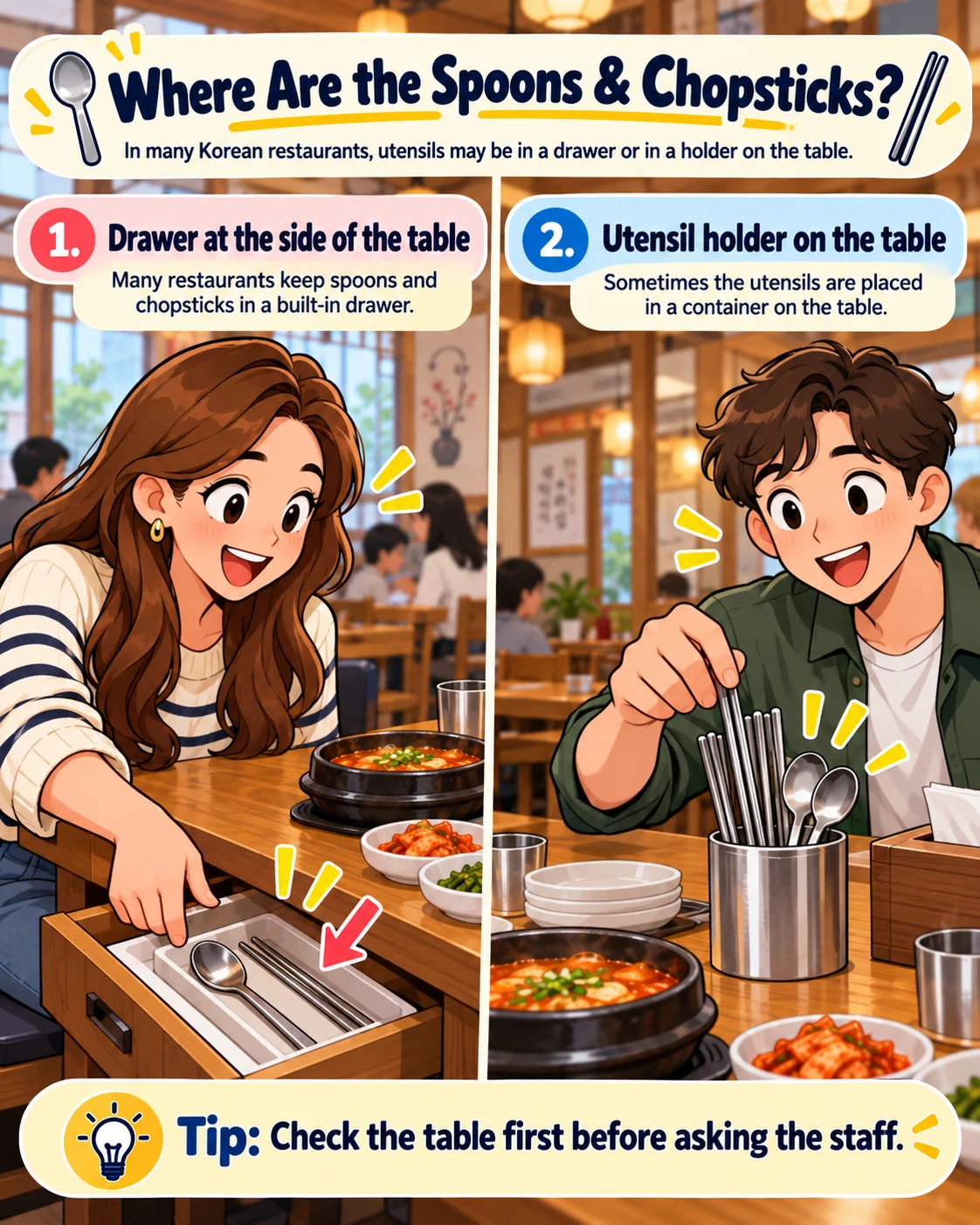 AI generated
Illustration made with AI to show the idea. Where the utensils are kept differs from restaurant to restaurant. Some Restaurants Require You to Remove Your Shoes
Ordinary table restaurants let you keep your shoes on, but restaurants with floor seating and some private rooms ask you to take them off.
Some Restaurants Expect Tables to Turn Over Quickly
In a busy restaurant it is considerate to leave your table once you have finished eating. Cafés are different, and many people stay for a long time.
Late-Night Services Are Widely Available
In city centers it is easy to find 24-hour convenience stores and late-night delivery. Opening hours vary by area and by shop.
Public Lockers Are Available at Many Stations
Coin-operated lockers are installed at major subway stations and similar places. They are handy when you want to leave your bags and travel or shop.
Road & Pedestrian Etiquette
Watch for Turning Vehicles at Crosswalks
Even when the pedestrian signal is green, check whether a vehicle is approaching. Drivers are required to protect pedestrians, but a quick look keeps you safe.
Stay Out of Designated Bicycle Lanes
Where space for pedestrians and bicycles is separated, use the marked walking area.
Watch for Delivery Motorcycles in Alleys
In Korean residential alleys, cars and pedestrians often pass very close together. Avoid changing direction suddenly.
Electric Scooters Have Special Rules
Riding an electric scooter requires a driving licence (a motorized-bicycle licence or higher), and carrying a second rider is not allowed. A helmet is required. Use bicycle lanes or the edge of the road, not the sidewalk. Rental apps may check your licence.
Check Before Opening Car Doors
When you get out of a taxi or car stopped at the roadside, check for bicycles and motorcycles coming from behind.
More Dining Customs
Scissors Are Common Dining Tools
In Korea, scissors are used at the table to cut not only meat but also cold noodles, kimchi and savory pancakes.
Restaurant Aprons Are Available
Barbecue and soup restaurants often provide aprons to protect your clothes. Ask for one if you do not see it.
Always Check the Spice Level
Some dishes that do not look red can still be spicy. If you cannot eat spicy food, ask before you order.
Some Kiosks May Reject Foreign Cards
Some unmanned ordering machines accept only Korean-issued cards. If your payment fails, ask the staff about another way to pay.
Use Tongs for Shared Food
When you pick up shared dishes or grilled meat, it is more hygienic to use the shared tongs rather than your own chopsticks.
Ask to Split the Bill
Some restaurants let each person pay separately, but splitting the payment can be difficult depending on the register system.
Check Hidden Food Allergens
Anchovy stock, salted shrimp, fish sauce, sesame and soy can be in a dish even when the name does not show it. If you have an allergy, ask about the ingredients and how the food is cooked.
Bathhouses & Jjimjilbang
Shower Before Entering a Public Bath
Washing your body thoroughly before you get into a shared bath is basic bathing etiquette.
Public Bath Areas Are Typically Nude
In ordinary public baths with separate areas for men and women, people usually bathe without swimsuits. In mixed jjimjilbang areas you wear the clothes provided.
Tie Up Long Hair in Shared Baths
For hygiene, tie up long hair so that it does not touch the water in a shared bath.
Keep Your Locker Key or Wristband Safe
At some facilities the wristband or key is also used to pay for extras. If you lose it, you may have to go through a check or pay extra.
Keep Quiet in Jjimjilbang Sleeping Areas
In shared resting areas, avoid talking loudly or disturbing other people who are sleeping.
Hotels & Reservations
Keep Your Passport Ready for Check-In
Hotels and other accommodation may ask for your passport or another ID to confirm the booking and complete the check-in procedure.
Some Accommodations Have No-Shoes Areas
Hanok stays and some rooms with heated floors are used without shoes. Follow the accommodation's instructions.
Some Reservations Require a Korean Phone Number
Some restaurant bookings, online orders and facility reservation services ask for a Korean mobile number or identity verification.
Cancel Reservations You Cannot Attend
Some restaurants and accommodations take a deposit or charge a cancellation fee. If you cannot go, cancel in advance.
Cooking May Be Prohibited in Guest Rooms
Using portable gas burners and other cooking equipment is often banned in ordinary hotel rooms. Check whether your room allows cooking.
Shopping & Payment Rules
Foreign Cards May Not Work Everywhere
Some payment machines, such as unmanned laundries, parking pay stations and photo booths, may accept only Korean-issued cards or certain mobile payment apps.
ID May Be Required for Age-Restricted Purchases
Shops may ask for proof of age when selling alcohol, cigarettes and similar products. Have a valid ID such as your passport ready.
Do Not Open Products Before Paying
At supermarkets and convenience stores, pay first before you open a drink or a snack.
Ask Before Trying on Clothes
Some small clothing shops have no fitting room. Ask the staff whether you can try the item on.
Take Care with Secondhand Transactions
Meeting in person to trade secondhand items is common in Korea. Choose a busy place and check the item before you pay.
Some Online Payments Require Local Verification
Korean websites may ask for mobile phone verification or a Korean payment method. Check whether they offer payment options for foreigners.
Healthcare & Pharmacies
Fill Prescriptions at a Pharmacy
After an ordinary outpatient visit, you take the prescription from the doctor to a pharmacy to have your medicine prepared.
Convenience Stores Sell Only Certain Medicines
Convenience stores may sell only a fixed list of basic medicines. Other over-the-counter medicines have to be bought at a pharmacy.
Look for Late-Night Pharmacies
Most pharmacies are not open 24 hours. At night, check separately for a pharmacy that is open.
Choose the Right Medical Department
In Korea there are many clinics for each field, such as internal medicine, ear-nose-throat and dermatology. It helps to find the clinic that matches your symptoms.
Know Korea's Emergency Numbers
Call 119 for fire, ambulance and rescue, and 112 for the police. For tourism-related help you can also use the 1330 Korea Travel Helpline.
Cultural Venues & Leisure
Cinema Seats Are Usually Assigned
Check the screen number and seat number shown on your movie ticket. Avoid moving to another empty seat on your own.
Photography May Be Restricted at Performances
Photos and video can be banned at musicals, concerts and exhibitions, or allowed only at certain times.
Late Entry May Be Restricted
If you are late for a performance, you may not be able to go in right away and may have to enter at a time set by the staff.
Karaoke Rooms Are Booked by Time
Karaoke rooms are usually paid by the hour. Extra service time may be added, but it is not guaranteed.
PC Cafés Have Their Own Ordering Systems
At a PC café you may log in at your seat or pay in advance, and you can often order food from the computer screen.
Everyday Facilities & Etiquette
Collect Laundry Promptly
At a self-service laundry, it is polite to take your clothes out as soon as the wash or dry cycle ends so that the next person can use the machine.
Dispose of Batteries Separately
Used batteries do not go in the general trash. Put them in the designated battery collection boxes.
Use Designated Medicine Collection Points
Leftover medicine does not go in the general trash or down the drain. Take it to your area's designated collection box or point. Where and how differ by area.
Cash Gifts Are Common at Weddings and Funerals
At weddings and funerals it is customary to give cash in an envelope. The amount depends on your relationship and the situation.
Look for the Wedding Reception Desk
At the entrance of a wedding hall, it is common to hand over the cash gift and receive a meal ticket. Not every wedding is the same.
Ask Before Using Shared Spaces or Belongings
In study rooms, study cafés and shared offices, a seat that looks empty may be reserved. Check the seat assignment and your time limit.
Check Locker Storage Time Limits
Some lockers charge extra after the set time, and items left for a long time may be handled separately.
About these tips
These are general customs, not laws. Practice varies by place, venue and person, so follow posted signs and staff instructions. Local rules such as bus, smoking and waste rules differ by city. Rules for takeaway cups on buses, seat belts, smoking, electric scooters and right turns were last checked on 2026-10-25; the other tips are common practice and were not checked against an official source.